
CircleIn- Circle in Daily
CircleIn Inc.Education
2.9366.00 Reviews
- Version
- 3.15.1
- Installs
- 10.00K
- Age Rating
- Everyone
Screenshots
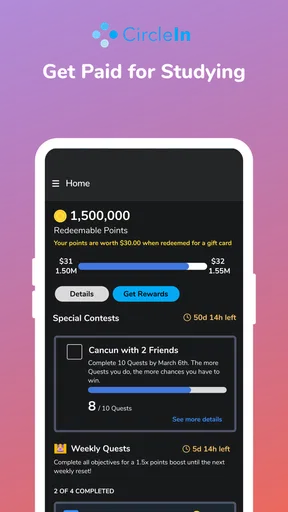
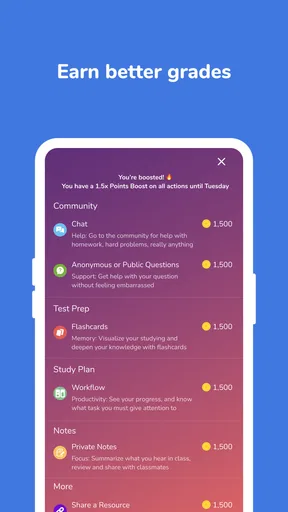
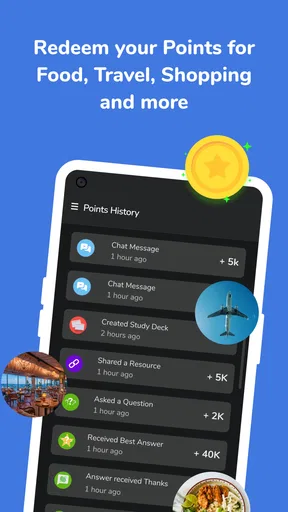
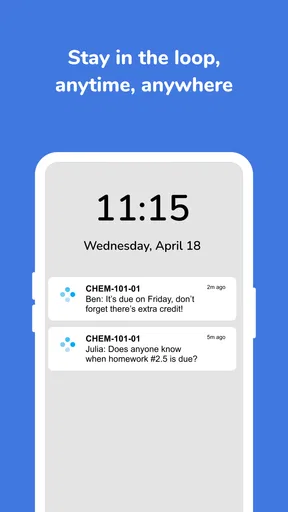
Our Review of CircleIn- Circle in Daily
 Analysis by Appyee
When I open a study app, I want it to help with the awkward moment between “I do not understand this assignment” and “I can finally move forward.” That is the space CircleIn tries to cover. It is an education app from CircleIn Inc. built around connecting students with classmates and learners beyond their immediate campus, rather than acting only as a private notebook or a collection of lessons.
My overall impression is mixed but worthwhile. CircleIn is most useful when you treat it as a place to ask, explain, and organize academic help, not as an automatic answer machine. The free price makes it easy to try, and the Everyone age rating keeps the entry point broad. At the same time, the experience depends heavily on whether enough relevant students are active when you need help. That social dependency is both its main strength and its biggest weakness.
From a stuck assignment to a clearer next step
A realistic use case is simple: I am working on homework in the evening, I reach a problem that is not explained well in my notes, and searching the wider web gives me several answers without much context. With CircleIn, the intended next step is to bring that question into a student-centered space and see whether someone can help me understand the method.
That difference matters. A search engine can return a solution, but it rarely knows whether I have misunderstood the question, skipped a prerequisite, or simply need the same idea explained in less formal language. A classmate may recognize the exact kind of confusion because they are studying similar material. The app’s value therefore comes less from replacing study and more from shortening the distance between a question and a useful human explanation.
I would begin by identifying the task before opening the app. Instead of posting something vague such as “Can anyone help with math?”, I would prepare the specific point of friction: the subject, the part I attempted, and the step where the reasoning stopped making sense. This is one of the most important practical habits with a community study app. A precise question gives other students something answerable and reduces the chance that the conversation turns into a string of guesses.
The same approach works in reverse when I am the person who knows the material. Explaining a concept to another student can expose gaps in my own understanding. CircleIn is therefore not only a help-seeking tool. It can also become a lightweight peer-teaching space, especially for students who learn better by discussing a process than by rereading a chapter.
Setting up the first study request
The first stage is deciding what kind of help I need. If the problem is conceptual, I would ask for an explanation. If I have already tried a solution, I would show the point where I became uncertain and ask someone to check the reasoning. If I need motivation or a study partner, I would frame the request around accountability rather than pretending I need a factual answer.
This preparation is more valuable here than it might be in a conventional reference app. A flashcard tool can immediately give me a repeatable review task. A video platform can offer a lecture. CircleIn requires me to translate confusion into a message that another student can understand. That extra step feels slower at first, but it can make the learning more active because I have to diagnose my own problem before asking for assistance.
I would also keep one question focused at a time. Combining several unrelated assignments in one post makes it harder for a potential helper to decide where to begin. A short, well-scoped request creates a cleaner handoff from my private study session to the wider student community. That handoff is central to how the app works: my progress depends on communicating enough context without turning the request into a long essay.
For a student who is uncomfortable asking questions publicly, this may be the first point of friction. The app can make peer support available, but it cannot remove the emotional hurdle of admitting that something is unclear. I would start with a low-stakes question or answer someone else first. Participating as a helper can make the community feel less like a help desk and more like a shared study room.
Moving from the question to the conversation
Once a request is visible to other students, the quality of the next step depends on the response. A useful reply should explain the reasoning, point out a mistaken assumption, or suggest a method for checking the work. A bare answer may help me finish the immediate task while leaving the original confusion untouched. I would therefore look for explanations that I can reproduce independently after the conversation ends.
This is where CircleIn differs from a standard homework-solution site. The useful unit is not merely an answer; it is the exchange around the answer. I can clarify what I meant, push back if a step seems inconsistent, and ask for an example. That back-and-forth is particularly helpful in subjects where the same final result can be reached through different methods.
There is also a trade-off. Peer answers are not automatically authoritative. A confident response can still contain an error, and a popular explanation is not necessarily the one that matches a teacher’s expectations. I would compare important guidance with class notes, assigned material, or an instructor’s method before submitting work. CircleIn can improve access to explanations, but it should not be treated as a substitute for academic judgment.
The app’s current version is 3.15.1, and it supports devices running Android 7.0 or later. Those details make it accessible to people using older Android hardware, which is useful for students who cannot replace a phone or tablet simply to join a study community. Still, compatibility does not guarantee that every interaction will feel equally smooth on every device. I would keep the app updated where possible and avoid relying on it as my only copy of important notes.
Handoffs between classmates and wider student support
The idea of connecting with classmates is especially practical when the question belongs to a specific course or assignment. A classmate may understand the teacher’s terminology, know which chapter the question comes from, or recognize a common mistake in that class. This local context can make a short reply more useful than a technically correct explanation found elsewhere.
The broader student connection is helpful when my immediate circle is unavailable. If nobody in my class is online or comfortable with the topic, reaching beyond that group may increase the chance of finding someone who has studied a similar subject. The benefit is variety: different students may explain the same concept using different examples, and one of those explanations may finally click.
That broader reach also introduces more uncertainty. A student from another course may use a different notation, follow a different curriculum, or solve the problem in a way my instructor does not accept. I would use wider community input for perspective and clarification, then translate it back into the language of my own course. This is a subtle but important workflow: the app can supply a bridge, while my class materials remain the final reference point.
For group work, I would use CircleIn as a place to resolve a narrow obstacle rather than as the entire project-management system. For example, one member could ask for help understanding a research concept, then bring the explanation back to the group’s shared document. The handoff should be explicit: who asked, what was learned, and how the information affects the assignment. Without that step, a helpful discussion can remain isolated in the app and never improve the finished work.
I would also avoid sending sensitive personal information in a study request. A question normally needs the academic context, not private details about classmates, instructors, or family. Keeping posts focused protects the conversation and makes it easier for other students to concentrate on the actual learning problem.
What the workflow produces when it works
The best outcome is not simply completing one question. It is leaving with a repeatable way to approach similar questions. If another student helps me identify the rule I overlooked, I can return to the original problem, solve it myself, and then test the method on a related example. That turns a social exchange into a genuine study loop.
I find the app most promising for students who already have some willingness to participate. Someone who asks clear questions, responds politely, and occasionally helps others is more likely to get value than someone who opens the app only to demand finished answers. Community tools reward contribution because participation creates the context that makes future help possible.
There is a useful efficiency trick here: before leaving a conversation, I would write a one-sentence takeaway in my own words. For example, I might note which assumption caused the error or which sequence of steps solved the problem. This prevents the interaction from becoming a temporary rescue that disappears as soon as I close the app. It also gives me a compact review point for later study.
Another practical outcome is confidence. A student may know more than they think but hesitate because the textbook explanation feels too advanced. A peer response can show that the difficulty is common and manageable. That emotional benefit is hard to reproduce with a static reference library. However, it depends on respectful exchanges and timely participation, so the experience will vary more than it would in a self-contained learning app.
CircleIn is free, which removes a financial barrier for trying this workflow. It has passed the ten-thousand-install mark and carries an average rating of 2.9 from around four hundred ratings, with more than three hundred written reviews. I read those figures as a sign that the app has reached a real student audience but does not deliver a uniformly satisfying experience. The rating should encourage realistic expectations: the concept is useful, yet the day-to-day result may depend on activity, relevance, and how well the app fits a student’s habits.
Where the process breaks down
The first failure point is an empty or poorly matched conversation. If I ask at an unusual time, choose a topic with little participation, or phrase the question too broadly, I may wait without receiving anything useful. That is not a problem a better explanation alone can solve. The service depends on a living network of students, and networks feel strongest in some subjects and moments than in others.
The second failure point is answer quality. Peer support can be encouraging, but it may not have the consistency of a carefully edited textbook or a structured course. If I need a guaranteed sequence of lessons, graded practice, or a formal explanation aligned with a syllabus, I would choose a dedicated learning platform instead. CircleIn is better suited to the gap between studying independently and finding a human perspective.
The third issue is the risk of passive use. It is easy to read an explanation, copy the key step, and move on without checking whether I can repeat it. I would deliberately close the loop by solving a similar problem without looking back. If I cannot do that, the conversation helped me finish a task but did not yet teach me the underlying idea.
There is also a social limitation for students who prefer complete privacy. Even when the academic question is ordinary, asking for help in a community can feel exposed. A private tutor, teacher message, or personal study guide may be a better option for someone who does not want to participate in a shared student environment. The app’s social design is central to its appeal, so it is not a minor detail that can be ignored.
Students looking for polished course content should also be selective. CircleIn’s purpose is interaction around study needs, not a replacement for every resource used in a class. I would pair it with official course material, a calendar, and a place to store my final notes. That combination gives me structure, authoritative references, and peer assistance without asking one app to do every job.
Who should give it a try
I would recommend CircleIn to a student who regularly gets stuck between lessons, wants to compare approaches with peers, or learns well by explaining ideas aloud or in writing. It is particularly appealing when the main problem is not a total lack of resources but the absence of a person who can say, “This is the step you are missing.” The free access makes experimentation sensible, especially if I already have a specific study question to bring into the community.
I would be more cautious for someone who needs immediate answers every time, dislikes social learning, or expects a complete curriculum. A search engine may be faster for a simple definition. A flashcard app may be better for memorization. A video course may be better for building knowledge from the beginning. A teacher or tutor remains preferable when the work is high stakes or the explanation must match a particular classroom standard.
The app is rated for Everyone, but that broad age label should not be confused with a guarantee that every response will suit every learner. I would still apply normal judgment to advice from other students and keep academic conversations respectful and focused. The most productive use is cooperative rather than transactional: ask clearly, evaluate the response, and return the favor when I can.
My recommendation after following the full workflow
CircleIn- Circle in Daily has a clear and useful idea: connect students at the exact point where independent study becomes difficult. In my experience, its strongest path is easy to describe: identify a narrow question, explain what I already tried, invite a peer perspective, verify the response against course material, and turn the explanation into a note or practice attempt.
That workflow produces real value when the community responds and when I remain responsible for understanding the result. It breaks down when activity is low, answers are unreliable, or I expect the app to replace structured teaching. Those limits keep me from recommending it as a complete education solution, but they do not make it irrelevant.
My final view is that CircleIn is worth trying for peer-based study support, especially if I am willing to contribute rather than only consume. CircleIn Inc. has made the app available as a free education tool, and its long-running presence since August 9, 2017 gives it a recognizable place in this category. I would keep a second source for formal learning and important academic decisions, but for the everyday handoff from confusion to conversation, it can be a useful addition to a student’s routine.
Verdict
Strengths of CircleIn- Circle in Daily
- Simple interface makes daily check-ins quick and easy.
- Encourages consistent self-reflection through regular mood updates.
- Useful for spotting changes in habits and emotional patterns.
- Lightweight design runs smoothly on most modern devices.
- Personal entries can help organize thoughts in one place.
Limitations of CircleIn- Circle in Daily
- Limited value if you do not use it consistently.
- Some features may feel too basic for advanced journaling needs.
- Frequent reminders could become distracting for some users.
- Privacy details should be reviewed before adding sensitive information.
- May offer little benefit to users seeking social interaction or coaching.
Similar Picks in This Category
View All
Duolingo: Language Lessons
Duolingo4.7

Google Classroom
Google LLC2.8

Unacademy: Learn & Crack Exams
Unacademy3.2

Bible App for Kids
Life.Church4.4

Cake - Learn English & Korean
Cake Corp.4.7

Brainly: AI Homework Helper
Brainly4.5
Frequently Asked Questions
What is CircleIn- Circle in Daily, and who is it designed for?
CircleIn- Circle in Daily is a social and communication app focused on helping users stay connected through shared circles, daily interactions, and personal updates. It may be useful for people who want a more organized way to communicate with friends, relatives, classmates, or communities. Before downloading, check whether the available circles and features match the type of social experience you are looking for.
How does CircleIn- Circle in Daily handle privacy and personal information?
Because CircleIn- Circle in Daily is built around social connections and daily activity, it may request access to information such as your profile details, contacts, notifications, photos, or device permissions. Review the privacy policy and permission prompts carefully during setup. Avoid sharing sensitive information publicly, and confirm who can view your posts, messages, location, or other activity before using the app regularly.
Is CircleIn- Circle in Daily free to download and use?
The application may be available to download at no initial cost, but some functions could depend on optional purchases, subscriptions, advertising, or premium services. Pricing and included features can vary between Android and iOS and may also change over time. Check the store listing before installing, especially if you want to use the app without paying or avoid recurring subscription charges.
Does CircleIn- Circle in Daily require an account or internet connection?
Most social applications of this type require users to create an account or sign in before they can participate in circles, exchange updates, or synchronize activity across devices. An internet connection is generally necessary for messaging, notifications, and shared content. Some basic screens may work offline, but the main communication features are likely to be limited until you reconnect.
Is CircleIn- Circle in Daily safe and suitable for younger users?
Suitability depends on the app’s age rating, moderation tools, community rules, and the way users interact inside circles. Parents should review the official store rating, privacy controls, chat options, and account settings before allowing children to use it. Encourage younger users not to share personal details, block suspicious accounts, and report inappropriate content or unwanted contact.
